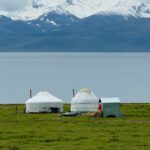
Oman rarely tops the first-timer’s Middle East list, next to Dubai’s skyline or Petra’s canyon. That’s its advantage. Drive out of Muscat for an hour and traffic thins into open highway, gravel tracks, and silence broken by wind over rock. Oman rewards drivers. Distances are manageable, roads are well paved, and the landscape changes fast: fjord-like coastline, canyon pools, dune fields, and mountain passes, often in a single day’s drive.
Why Oman Works for a Road Trip
Oman’s road network is one of the best-maintained in the region, and rental cars are affordable compared to Europe. Fuel is cheap. Signage is bilingual (Arabic and English), and distances between major stops rarely exceed three or four hours.
A rough loop many travelers follow:
- Muscat, capital and coastal base
- Nizwa and the Hajar Mountains, forts and canyon villages
- Wahiba Sands, desert camp under open sky
- Sur and the coast, dhow-building town and turtle beaches
- Musandam peninsula (a separate trip north, cut off from the rest of Oman by UAE territory)
Wadis: Oman’s Signature Landscape
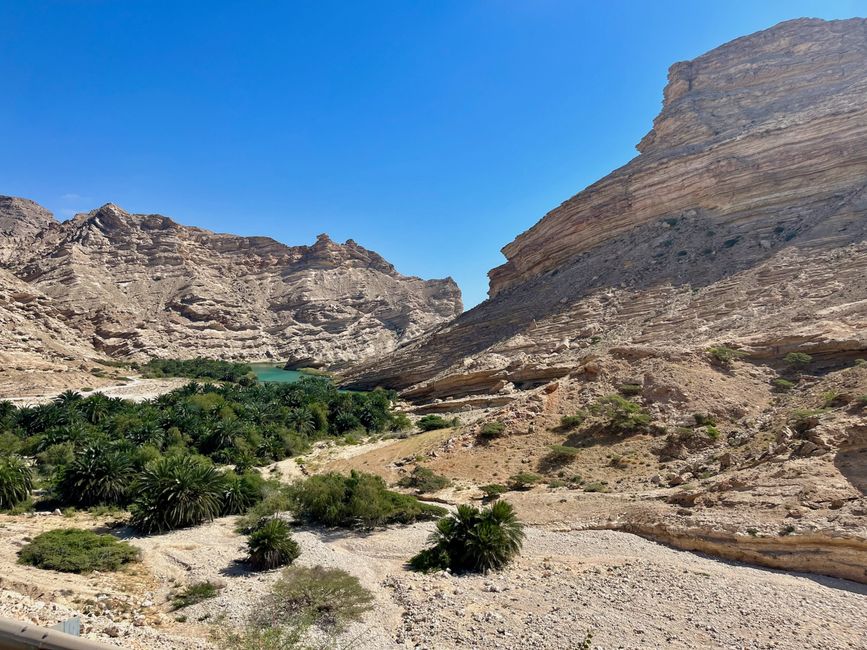
A wadi is a valley or dry riverbed that fills with runoff after rain, often holding permanent pools between towering canyon walls. Wadi Shab and Wadi Bani Khalid are the most visited, both reachable on a day trip from Muscat, and both worth the short hikes and rope-assisted swims through narrow rock corridors.
“You walk in expecting a dry gorge and end up swimming through a slot canyon toward a hidden waterfall. Nothing else in the region looks quite like it.”
Go early. Wadis get crowded by mid-morning, especially on Fridays, and the light on the canyon walls is far better before 10am. Flash floods are a real hazard after heavy rain upcountry, even if it looks clear where you’re standing, so check forecasts and avoid entering wadis when storms are reported inland.
Desert Nights in Wahiba Sands
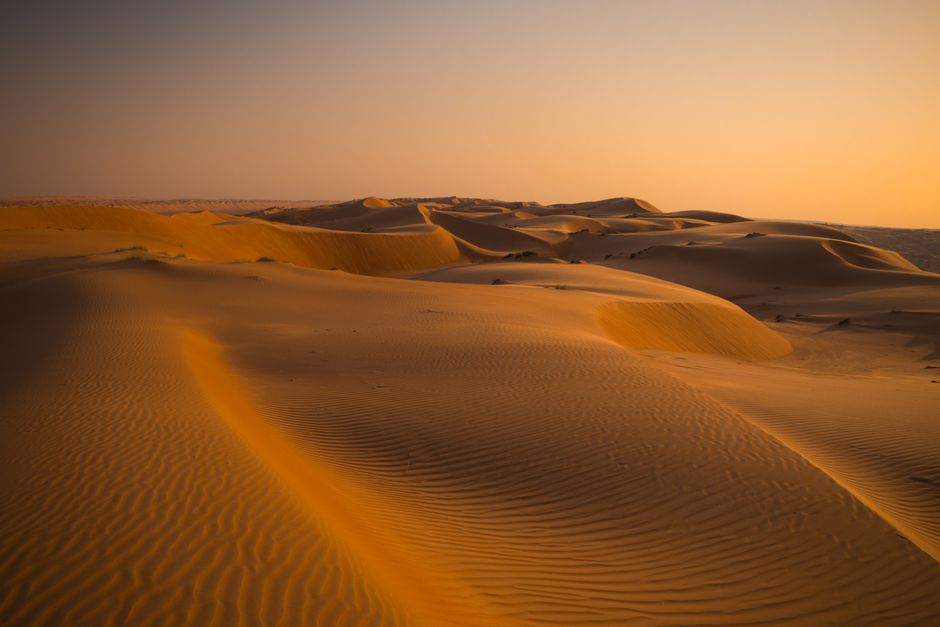
The Wahiba Sands (also called Sharqiya Sands) offer the classic dune experience without Dubai-style crowds. Most travelers book a desert camp, arriving by 4×4 for sunset over the dunes, dinner under stars, and a quiet morning walk before the heat sets in.
A few practical notes:
- Standard sedans cannot handle the sand tracks; either book a 4×4 transfer or drive one yourself with tires deflated for traction
- Desert camps range from simple tents to fairly comfortable permanent setups with private bathrooms
- Nights can get surprisingly cool between November and February, so pack a light jacket
Mountains and Ancient Forts
The Hajar Mountains rise sharply behind the coast, and Nizwa sits at their base as Oman’s old inland capital. Nizwa Fort, with its massive circular tower, is the best-restored example of Oman’s fort-building history, and the adjoining souq sells dates, silver jewelry, and fresh produce most mornings.
Nearby, the mountain village of Misfat al Abriyeen preserves centuries-old irrigation channels (falaj) still watering banana and palm terraces. Jebel Shams, Oman’s highest peak, has a rim trail sometimes called the Balcony Walk, tracing the edge of a canyon deep enough to earn the nickname Grand Canyon of Arabia.
Other Forts Worth the Detour
- Bahla Fort, a UNESCO World Heritage Site with mudbrick walls
- Jabrin Castle, known for painted ceilings and defensive tunnels
- Al Hazm Fort near Rustaq, less visited but well preserved
Coastline and Sur
East of Muscat, the coast road runs past fishing villages toward Sur, historically a center for wooden dhow shipbuilding, a craft still practiced in small yards near the harbor. South of town, Ras al Jinz protects nesting green turtles, and guided night visits let travelers watch females dig nests on the beach, though flash photography and unsupervised wandering are strictly banned to protect the animals.
Food and Prices
Omani food leans on grilled meats, rice, and slow-cooked dishes. Shuwa, meat marinated in spices and slow-cooked in an underground pit, traditionally appears at festivals but shows up in restaurants too. Look for:
- Mishkak, skewered grilled meat sold from street carts, cheap and reliably good
- Omani halwa, a dense sweet made with sugar, ghee, and rosewater
- Fresh dates, sold everywhere and often given as a welcome gesture
Prices sit between Dubai and cheaper parts of South Asia. A simple local meal runs 2 to 4 Omani rial (roughly 5 to 10 USD), a mid-range restaurant dinner 8 to 15 rial, and a rental car for a week starts around 120 to 180 rial depending on season and vehicle class. Fuel is inexpensive by global standards, which matters on a route covering hundreds of kilometers.
Public Safety and Practical Tips
Oman is consistently regarded as one of the safer countries in the Middle East for travelers, including solo women, with low rates of violent crime and a culture that places high value on hospitality toward guests. That said, a few points matter for a road trip specifically:
- Mountain and wadi roads can wash out after storms; check conditions before driving inland during rainy periods (mainly winter)
- Modest dress is expected outside resort areas, particularly at forts, mosques, and rural villages
- Alcohol is available in licensed hotels and restaurants but not sold openly elsewhere
- Carry extra water and a paper map or offline GPS for stretches without signal, especially in Musandam and deep desert routes
Oman doesn’t shout for attention the way its neighbors do. It rewards the traveler willing to drive further, wake earlier, and swim into a canyon pool that no highway sign pointed toward.
Follow us on Facebook