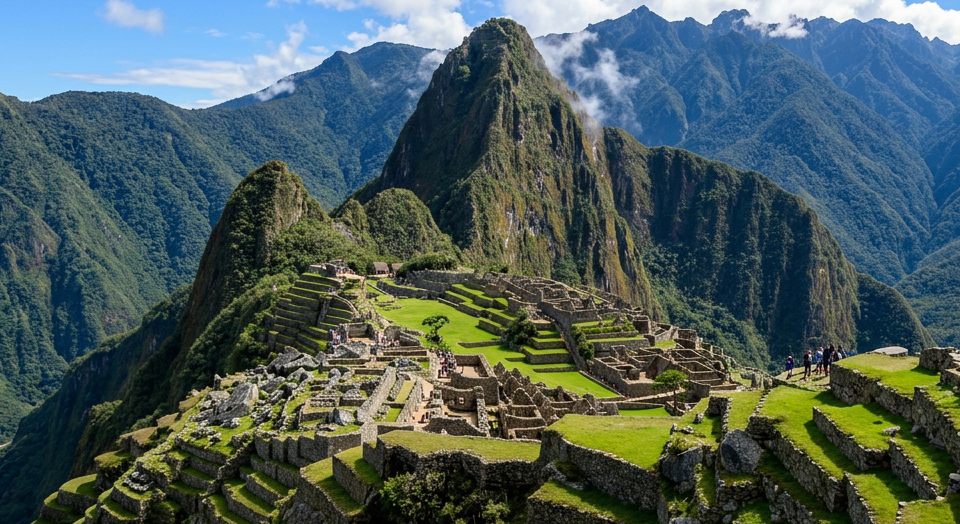

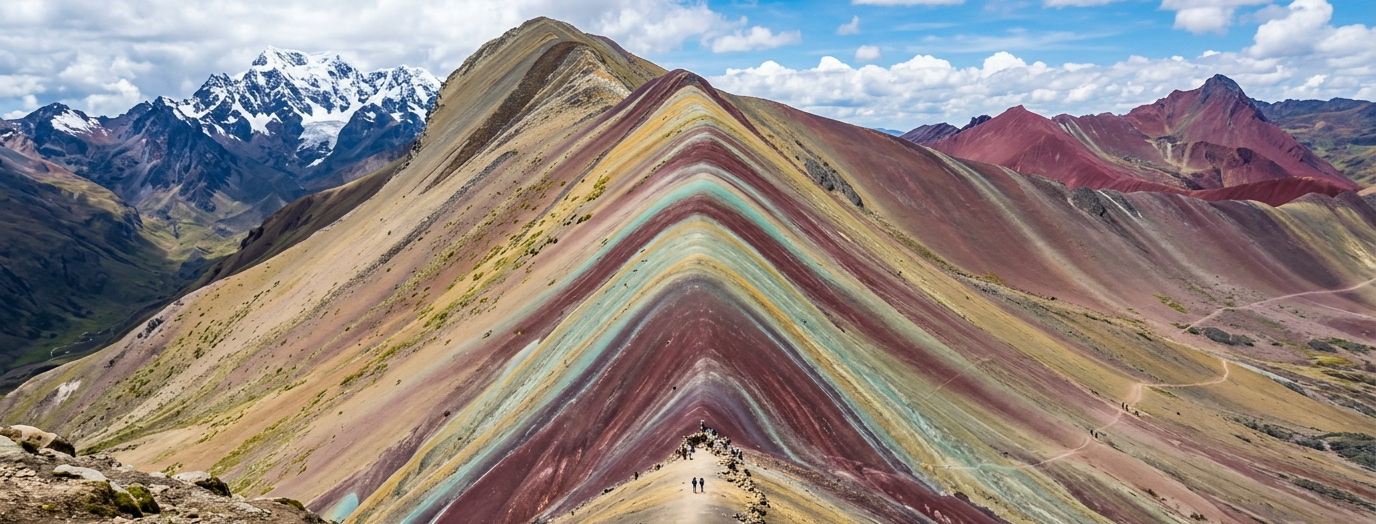
A well-planned trip to Peru can cover the highlights around Machu Picchu, the historic complex itself, and the spectacular mountain ranges of the Cusco region. A classic route starts in Lima, the Peruvian capital, moves on to the Sacred Valley of the Incas, follows the pioneers’ path over the high passes of the Salkantay trek, and, once the historical sights are behind you, heads into the Ausangate massif, home to the fantastical Rainbow Mountains.
Peru is such a varied and captivating country that a second trekking route makes just as much sense: the circuit around Alpamayo, in the northern part of the Peruvian Andes. Machu Picchu sits in a completely different part of the country, but skipping it on a trip to Peru would be unthinkable. If you haven’t been yet, a one-week add-on before the main trek works beautifully, Machu Picchu, the Sacred Valley, and a day trip to the Rainbow Mountains. It doubles as excellent acclimatization for the climbs that follow.
A City Historians Still Argue About
Perhaps no other ancient archaeological site has generated so much scholarly debate, or attracted so many legends and speculative theories about its origins. What we know for certain is that the city was built during the Inca Empire and played an extremely important role in that civilization. Beyond that, historians still have no single agreed account of its exact status and purpose. Nor is it known why or how its inhabitants ultimately abandoned it.
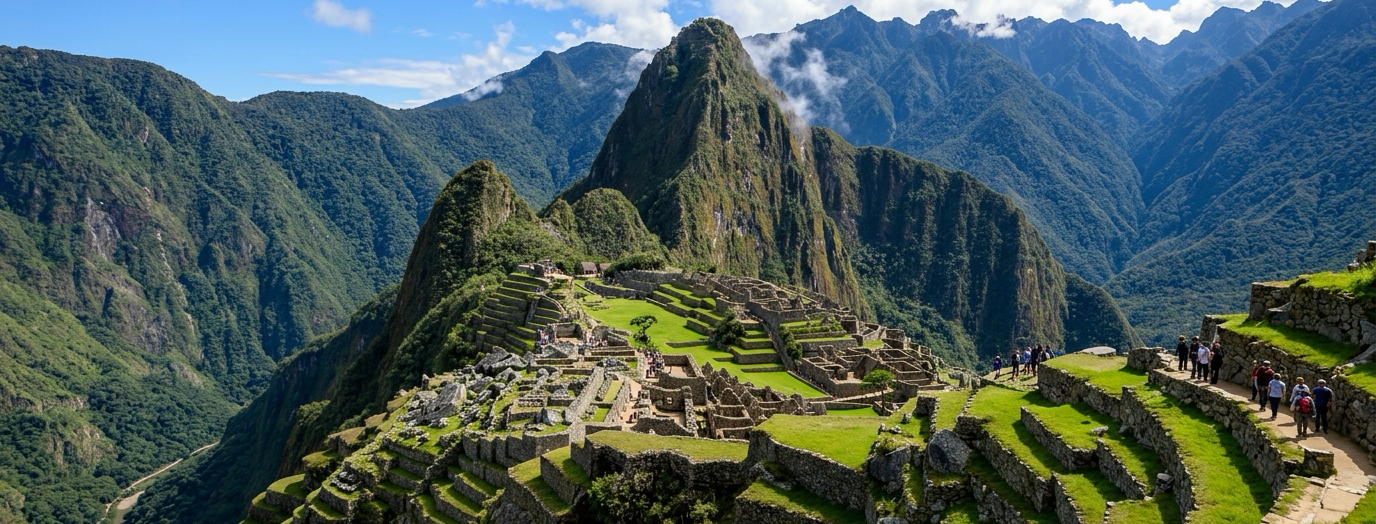
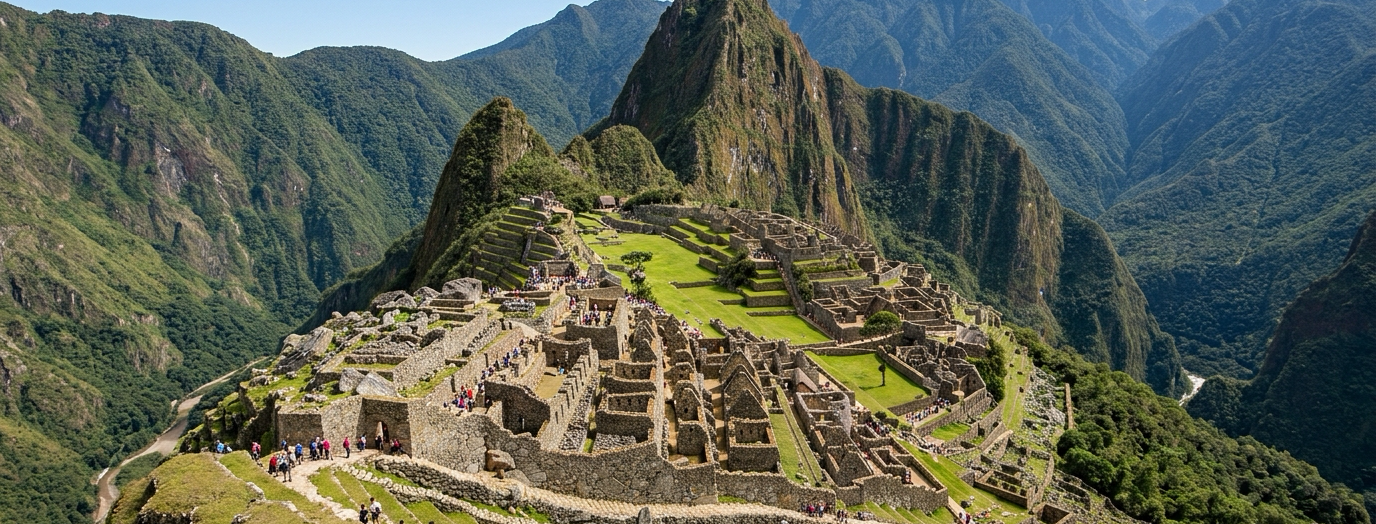
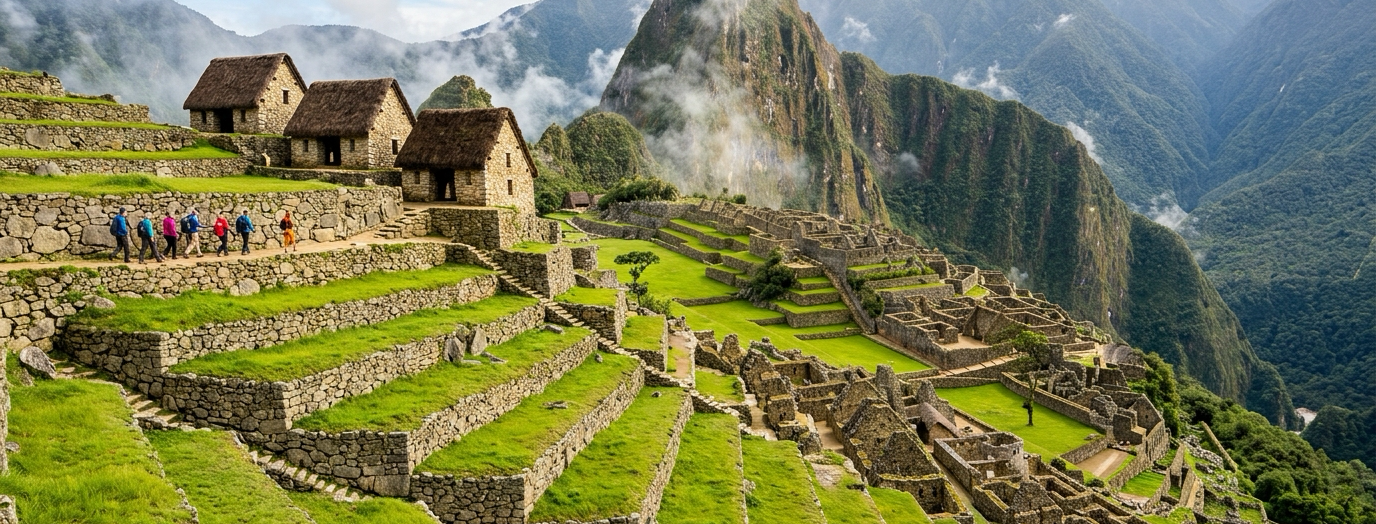
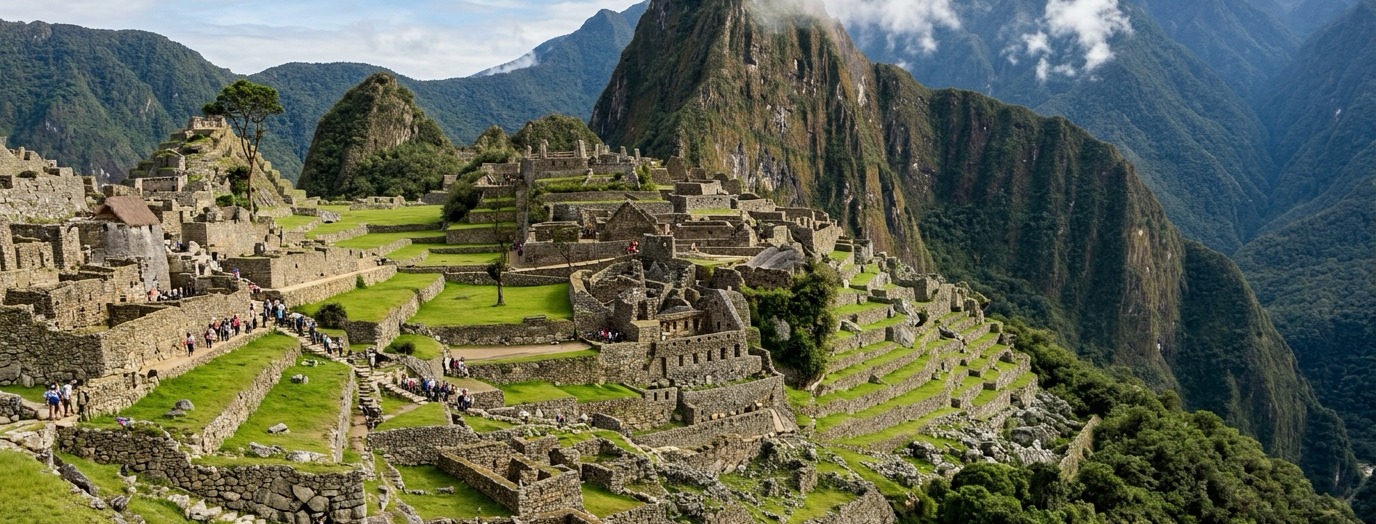
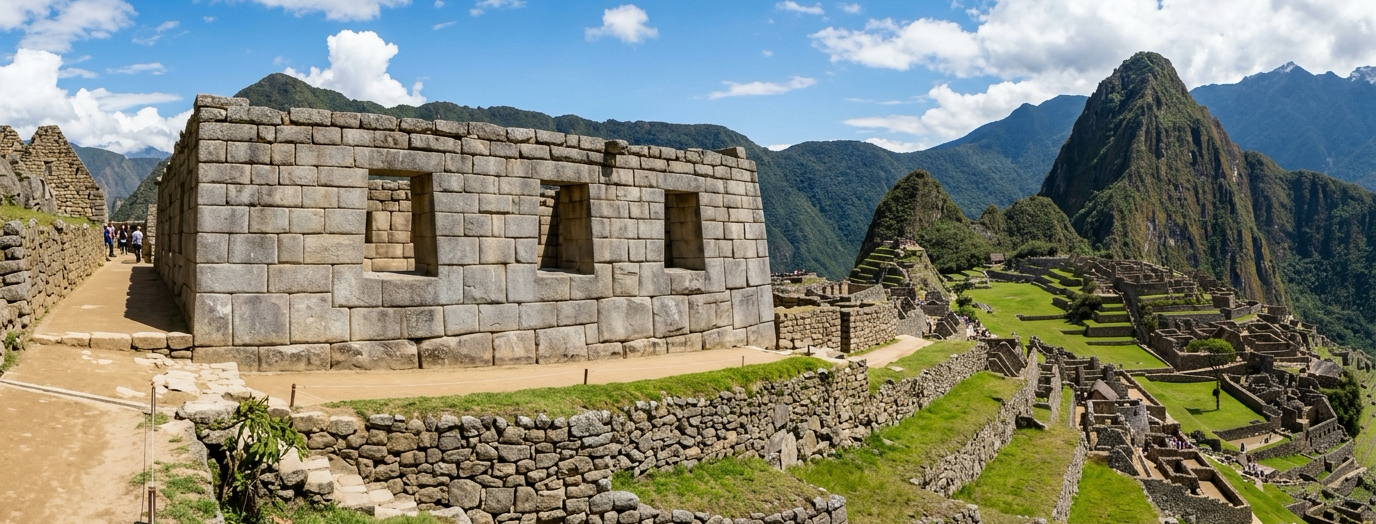
Because the Spanish colonizers of the 16th century never found the buildings hidden deep among the mountains and jungle, the architecture of Machu Picchu has come down to us almost entirely unchanged. Walking its narrow lanes and terraces, you can picture what daily life looked like here centuries ago.
Because the Spanish never found it, Machu Picchu survived almost exactly as the Incas left it, narrow lanes, terraces, and all.
Its unique history and beauty earned Machu Picchu UNESCO World Heritage status in 1983, and a place among the New 7 Wonders of the World alongside the Taj Mahal, the Colosseum, the Great Wall of China, Chichén Itzá, Petra, and the statue of Christ the Redeemer in Rio de Janeiro. The famous photographs are recognizable at a glance thanks to the unmistakable landscape: stone buildings arranged on terraces at the foot of two rocky peaks, the classic camera angle, available right at the start of the viewing circuit. The mountains in those photos are Huayna Picchu (the taller of the two) and Huchuy Picchu. Visitors can climb one of them, but that requires buying a separate ticket in advance, no more than 400 are sold per day.
Getting There
How to reach Machu Picchu is the question that worries most travelers planning a trip to Peru. The city lies in a remote mountain region in the middle of the jungle, with no road connection to the outside world. Doing it independently can be a genuinely tricky logistical puzzle for first-timers, though once you understand the local transport and tourist routes, it turns out to be far simpler than it looks.
Lima to Cusco
First, fly internationally into Lima, the Peruvian capital, on the Pacific coast. From there, a domestic flight takes you to Cusco, the main city in the Peruvian Andes and the former capital of the Inca Empire. The flight takes just an hour and a half and costs roughly $80-100 one way. There is a cheaper bus option, but the long distance and the endless mountain switchbacks make it a 20-plus-hour ordeal, too exhausting for a holiday.
The Sacred Valley
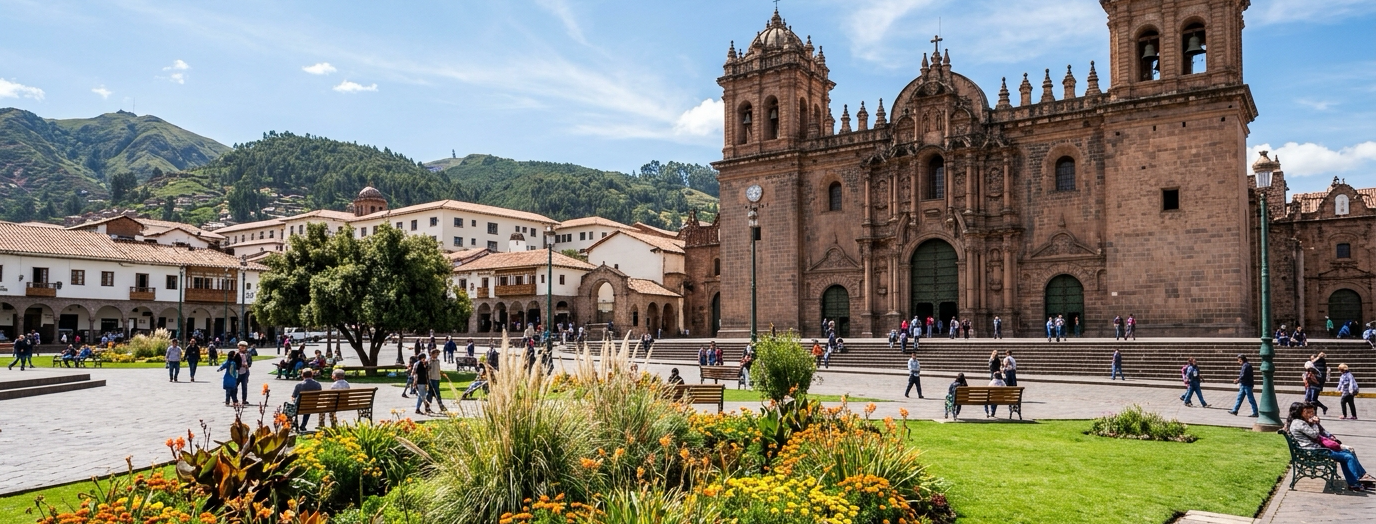
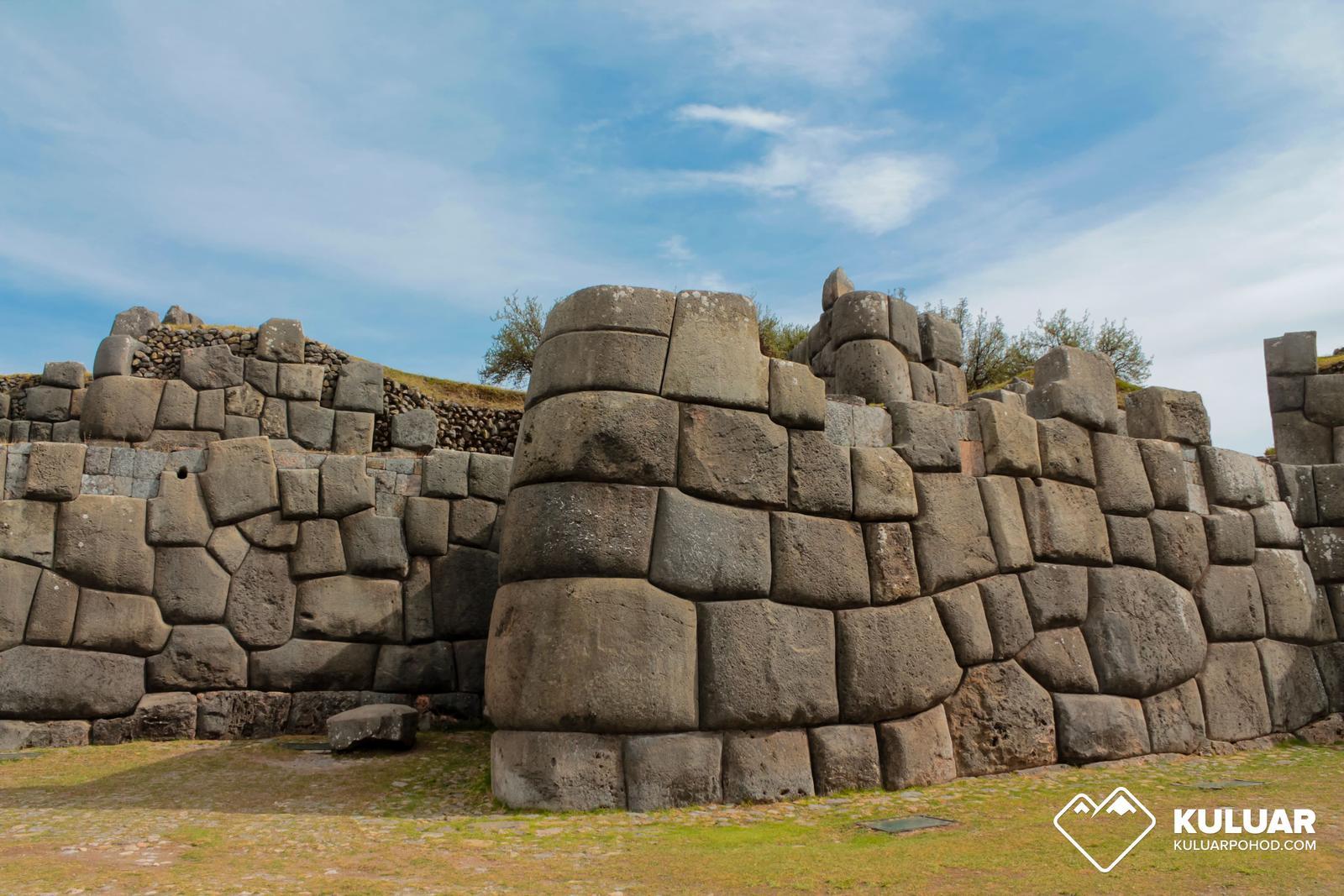
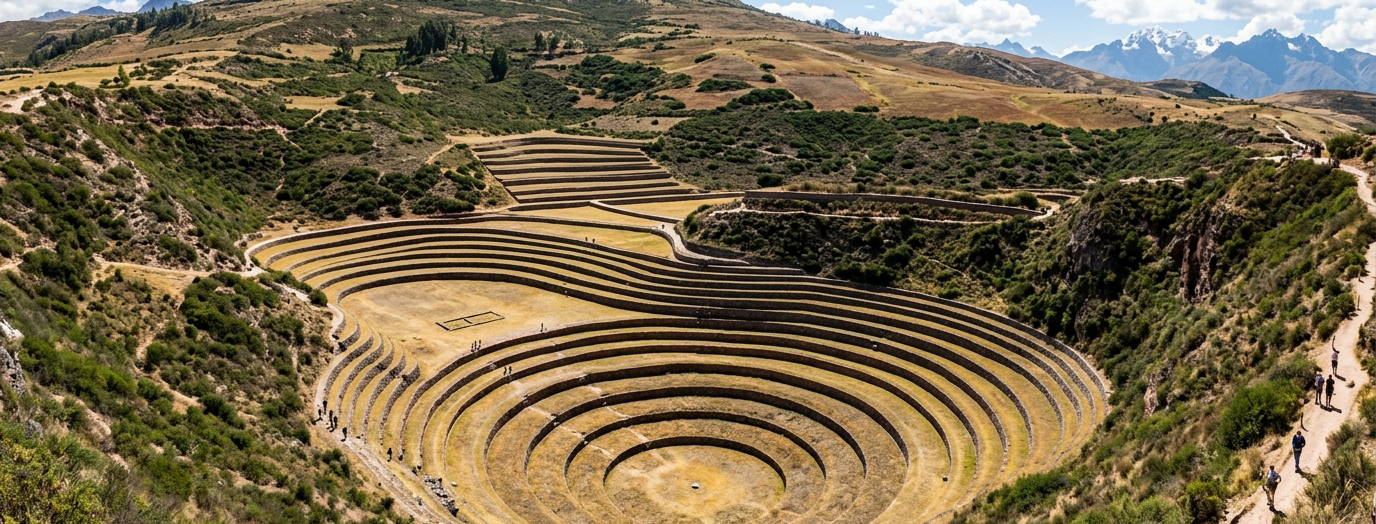
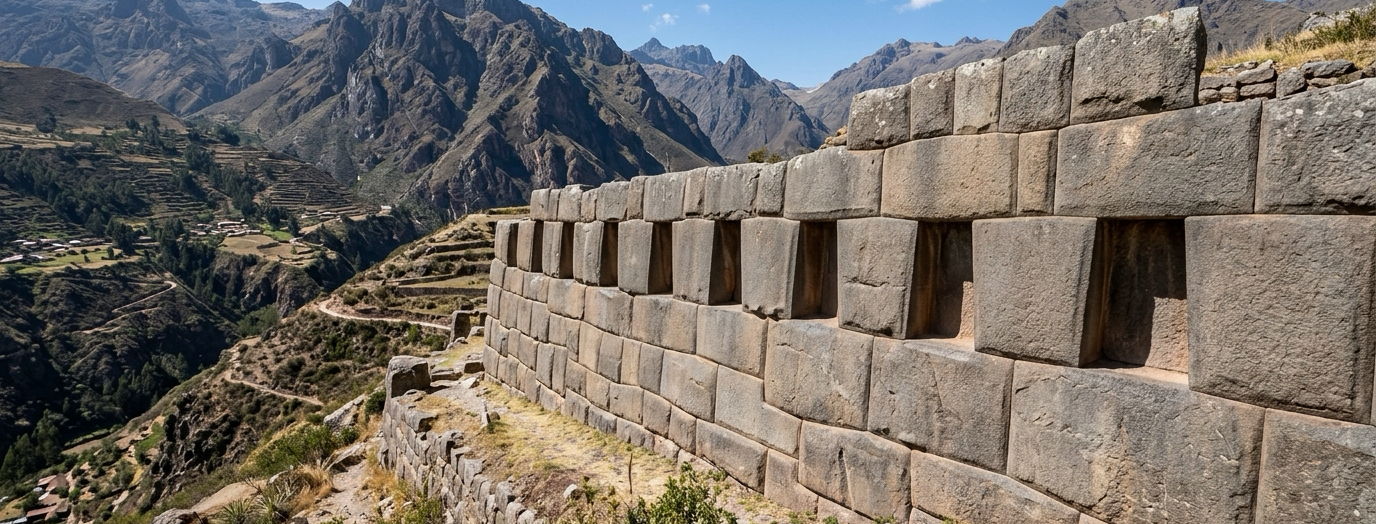
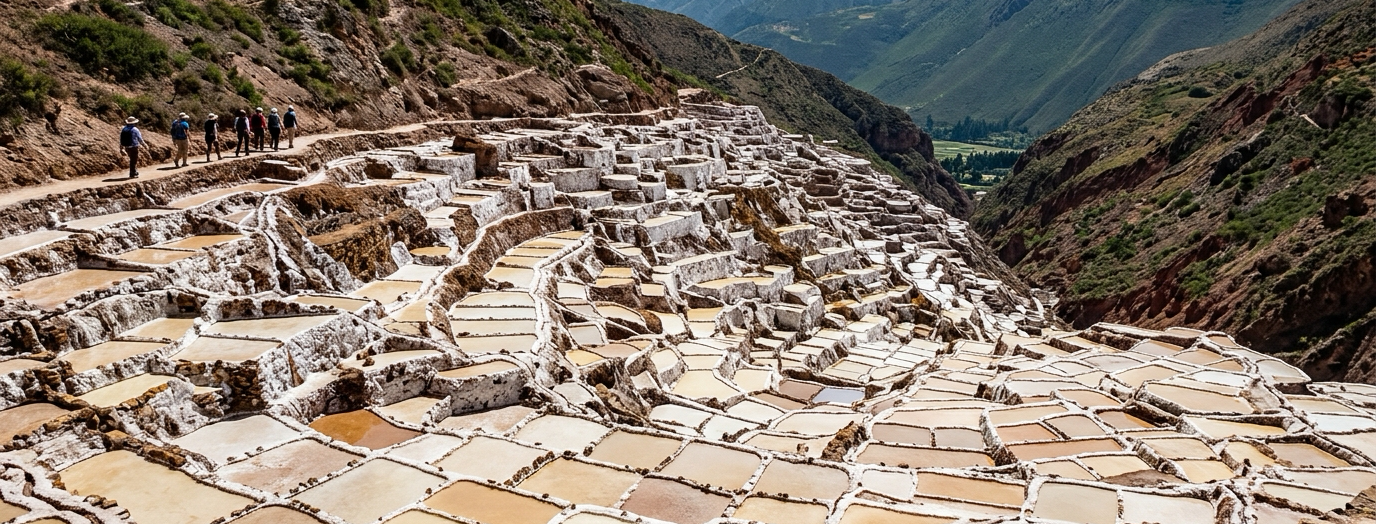
Cusco sits in a mountain valley in the heart of the Peruvian Andes. The surrounding area is called the Valle Sagrado de los Incas, the Sacred Valley of the Incas, cut through by the churning waters of the Urubamba River. It holds a wealth of ancient structures and monuments from the empire of Tawantinsuyu: the imposing fortress of Sacsayhuamán, the Qorikancha Temple of the Sun, the ancient towns of Pisac, Chinchero, and Ollantaytambo, the labyrinths of Q’enqo, the salt terraces of Maras, the mysterious circular terraces of Moray, the Tambomachay sanctuary, and many more. All of them are worth visiting, and several can impress just as much as Machu Picchu itself.
There’s a practical reason to go, too. Cusco sits at a considerable 3,400 meters above sea level, and arriving without prior altitude acclimatization can be a real shock to the body. A trip down into the Sacred Valley drops you to a lower elevation and lets you adjust to high-altitude conditions during unhurried tours of Inca-era sites.
Crossing the Andes
Reaching Cusco isn’t enough to get you to Machu Picchu. Another 80 kilometers across Andean ridges still lie ahead. The ancient Incas covered that distance on what is now called the Inca Trail. Access to the trail is tightly regulated by local authorities: only 500 people per day are admitted, and the route can only be walked as part of an organized group with a licensed guide, cook, and porters. Places should be booked at least six months in advance.
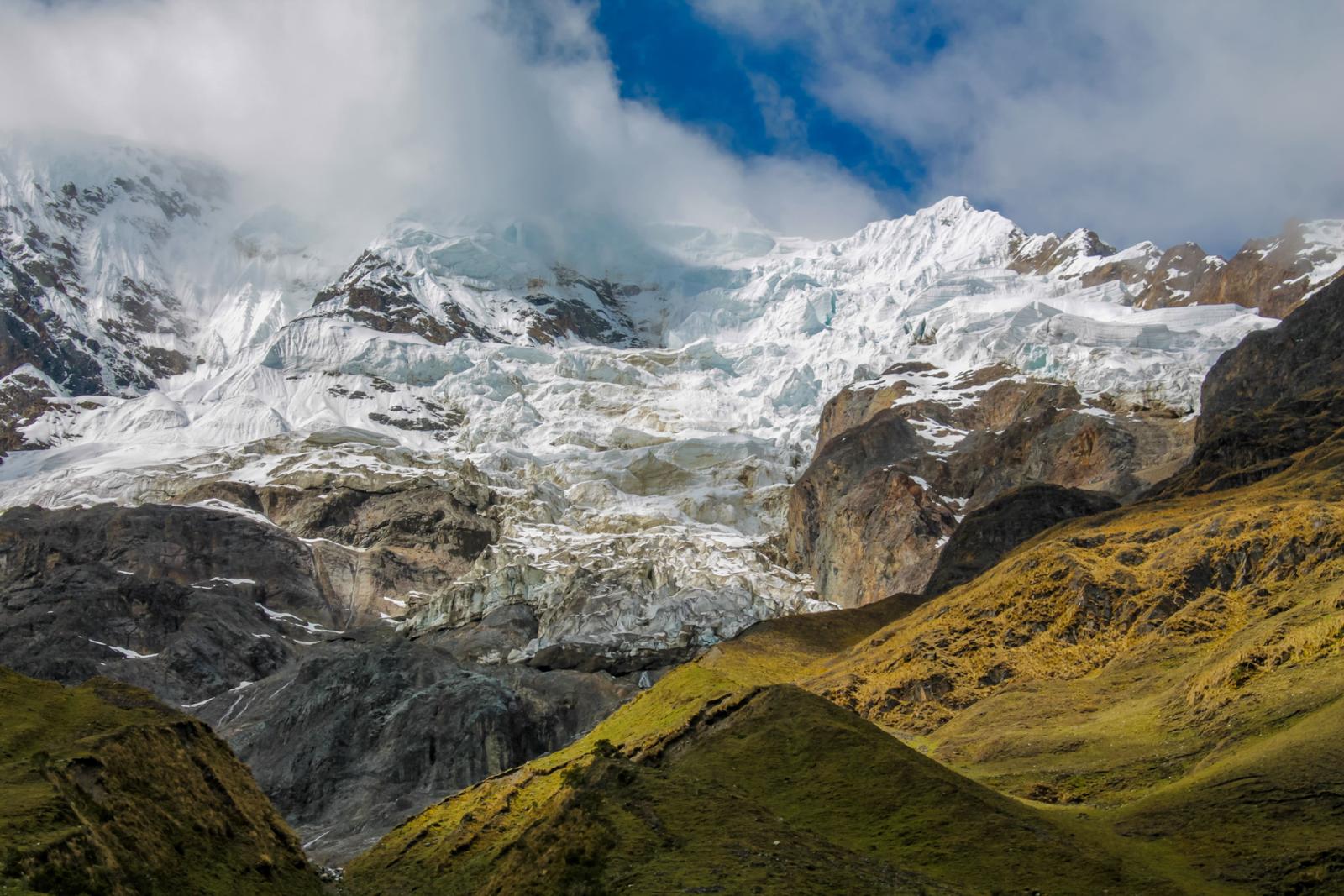
There’s also an alternative crossing, the somewhat more physically demanding Salkantay Trek, which tops out at a pass of 4,600 meters. It’s the harder option, but also the more spectacular one, with views of snow-capped peaks over six thousand meters.
By Train
The simplest way in, if you’d rather not walk dozens of kilometers through the mountains, is the train to the village of Aguas Calientes (recently also known as Machu Picchu Pueblo), at the foot of the mountain where the ancient city stands. The trains foreigners can travel on are built specifically for tourists and are quite comfortable, even in economy class. The cheapest tourist ticket for the four-hour ride from Poroy station near Cusco to Aguas Calientes runs about $70. At the other end of the scale, $600 buys the most discerning travelers a premium journey aboard the Belmond Hiram Bingham, with meals, drinks, a private guide, and a cultural program included.
From Aguas Calientes, very little remains: five kilometers and 400 meters of ascent. You can walk it on a winding jungle path, or pay an extra $15 for the bus up and back down. Travelers arriving via the Inca Trail enter through the Sun Gate, at the upper end of the city. Those coming up from Aguas Calientes tour the site from the lower gate, gaining height gradually.
When to Go
The best time to visit Peru is dictated by the local climate. Weather during Andean trekking and a Machu Picchu tour depends not only on temperature but on rainfall, which varies sharply by season. Peru has summer and winter, but in the Southern Hemisphere they’re flipped relative to Europe: December through February is summer, June through August is winter.
Don’t rush to book for January, though. Along with the warm air masses, that time of year brings very heavy rains to the mountains. The best window for Machu Picchu is the dry season, which in the Peruvian Andes runs from May through mid-October.
The sweet spot is planning trips to maximize the odds of clear, sunny weather across the whole route while avoiding the absolute peak of tourist season, when the region is flooded with visitors. In practice, that means:
- Early season, May. The dry season has just begun and crowds are still thin.
- Late dry season, September and October. Reliable weather, fewer people than midwinter.
- Pack warm layers. Above 2,000 meters, expect cool conditions for evening walks and overnight stays.
- But bring a T-shirt too. During the day, thanks to the proximity to the equator, the sun makes even the relatively cold winter months feel almost like summer.
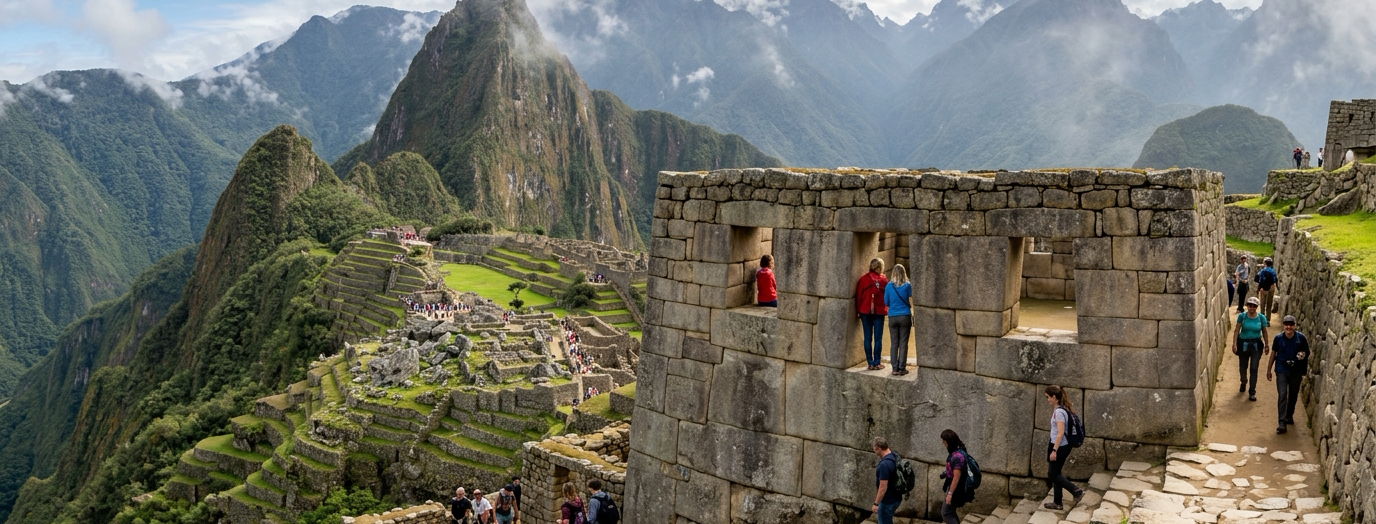
Mountain weather in Peru is changeable, and even in the dry season cloudy, rainy days aren’t out of the question. The part of the massif where the ancient Inca city stands is known as the “cloud forest” for its habit of sinking into thick fog every morning. Over the course of the day the fog lifts, creating the impression that the city is floating above the clouds, which is why Machu Picchu is so often called the “city in the sky.”
Visiting the Site
The archaeological complex opens to visitors at 6 a.m., and by then a sizable queue has usually formed of people hoping to catch the first morning bus and reach the viewpoints before the inner buildings and terraces fill with other people. Visitor numbers are now regulated by the hour, so entry tickets should be bought well ahead of your trip. Each ticket admits you at a specific time, and the prime early-morning slots sell out fastest.
How Long It Takes
Touring the city generally takes 3 to 6 hours, depending on whether you plan to climb to the viewpoint atop Huayna Picchu or Huchuy Picchu. You can also add one of several optional walks:
- The Inca Bridge
- The Temple of the Moon
- The Sun Gate
- Montaña Machu Picchu (3,082 m), a climb that will take up most of your day
Rules to Know
All the buildings in the complex can be seen on a standard tour, but bear in mind that you won’t be able to double back to the viewpoints. Visitor flow is one-way only, following the signs, and guards keep a close watch for anyone breaking the rules. Climbing on the walls is prohibited, as is taking any stones with you.
A Few Curious Facts
The name translates from Quechua as “Old Mountain,” but the historical name the Incas used at the city’s height was something else. One theory holds that it may have been called Llaqtapata. Unfortunately, the Inca civilization left no written records, and what local people could have told us was systematically erased from generational memory by the Spanish colonizers. As a result, we know remarkably little about the city’s history.
What Was It For?
Competing theories abound:
- A royal retreat. The mountain city may have served as the emperor’s summer residence.
- A university. It could have been a place where the children of the Inca nobility were taught.
- A religious sanctuary. Another theory about this strangely sited city is that it was inhabited mainly by women, priestesses of the sun god Inti.
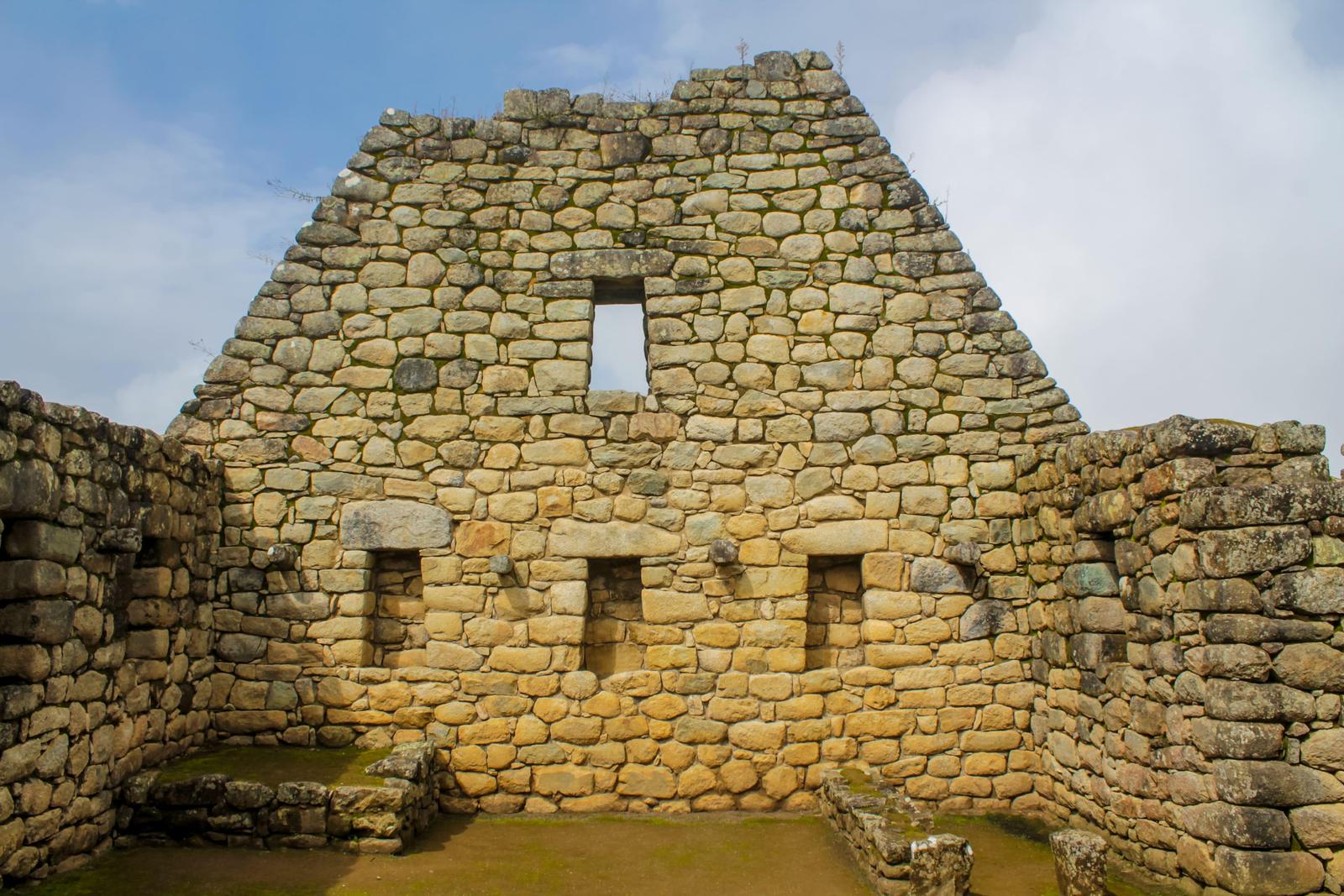
Numerous finds and the internal architecture both point to significant religious importance. There was a large sacrificial altar and several temples, among which the Temple of the Sun, the Temple of the Condor, and the so-called Temple of the Three Windows stand out for their perfectly fitted stonework. The last of these appears to have been used for astronomical observation and keeping the calendar.
Rediscovery
Until the early 20th century, Machu Picchu remained unknown to the New World. The Spanish conquistadors never found it during the conquest of Peru, and local people had abandoned and forgotten it. Legends of a lost Inca city circulated, but no one knew its exact location.
That held until 1911, when American explorer Hiram Bingham set out on an archaeological expedition, having obtained permission from local authorities to search for Vilcabamba, the city where, according to legend, the last Inca emperor hid his gold before his death. He never found the gold. But with the help of a local boy, whom he paid a single coin, Bingham stumbled onto a genuine historical treasure: a superbly preserved ancient city.
Excavation and clearing of the dense overgrowth took several years. During that time Bingham managed to ship a substantial number of archaeological finds to Yale University’s collection, before the Peruvian government passed a law banning the export of such artifacts. Word of the lost city’s discovery spread around the world, and from the mid-20th century onward tourists began arriving in numbers. As of 2017, more than 1.4 million visitors had come to Machu Picchu.
Today the Peruvian authorities cap visitor numbers at 2,500 per day to preserve the integrity of the complex. So if ancient history and the spirit of adventure appeal to you, you can be one of the lucky ones who sees Machu Picchu with their own eyes.
Follow us on Facebook