

For a long time the Azores stayed one of Portugal’s best-kept secrets, but these nine volcanic islands scattered across the Atlantic are drawing more travelers every year. It’s hard not to fall for their lush green landscapes, dramatic cliffs, and endless ocean views.
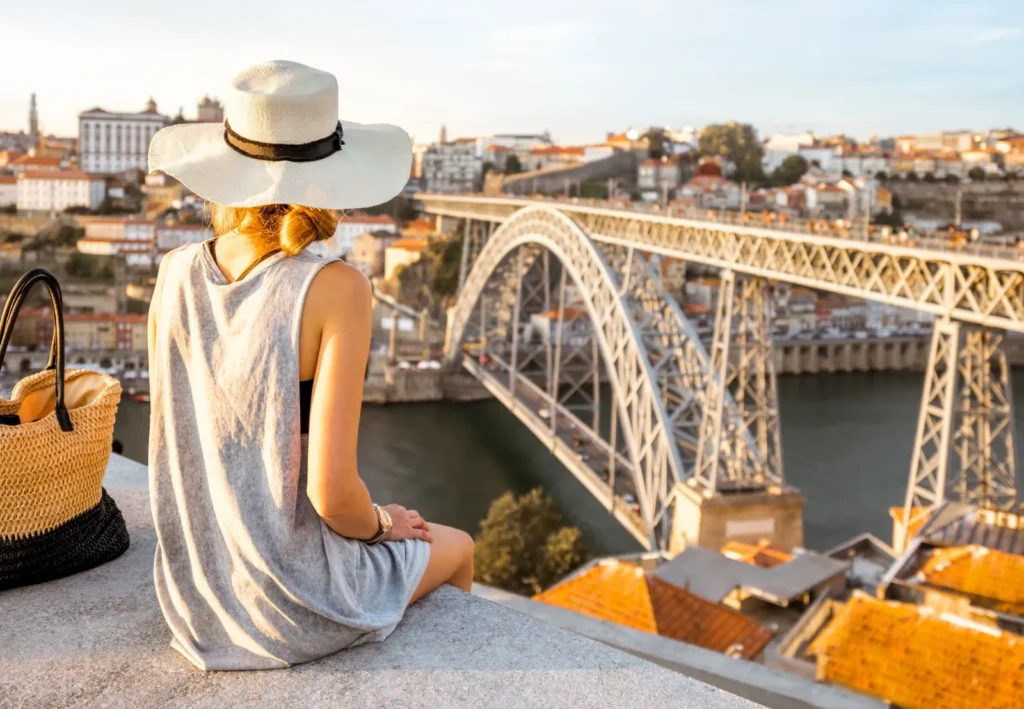

It’s hard not to fall for their lush green landscapes, dramatic cliffs, and endless ocean views.
This itinerary explores all nine islands by plane, car, on foot, and by boat. Along the way there’s the history of these rocky islands, old Portuguese architecture, whale-watching trips, natural surroundings to soak in, and plenty of thermal pools to relax in.
You can follow this route from start to finish, or pick out just the islands that appeal to you most.
Planning Your Time
Most of the Azores’ main sights can be covered in two to three days per island. The exception is the archipelago’s largest island, São Miguel, which deserves at least five to seven days. Terceira is also worth a longer stay. This itinerary is built around a full month, but it’s easy to shorten and focus only on the islands you want to see.
São Miguel and Terceira are the best islands to base yourself on and start from, since most flights arrive there, which makes planning the rest of the trip easier.
Getting There and Getting Around
Most international flights to the Azores land at Ponta Delgada airport on São Miguel. Terceira also has direct flights to the UK, the US, and Canada. The other islands connect directly to mainland Portugal.
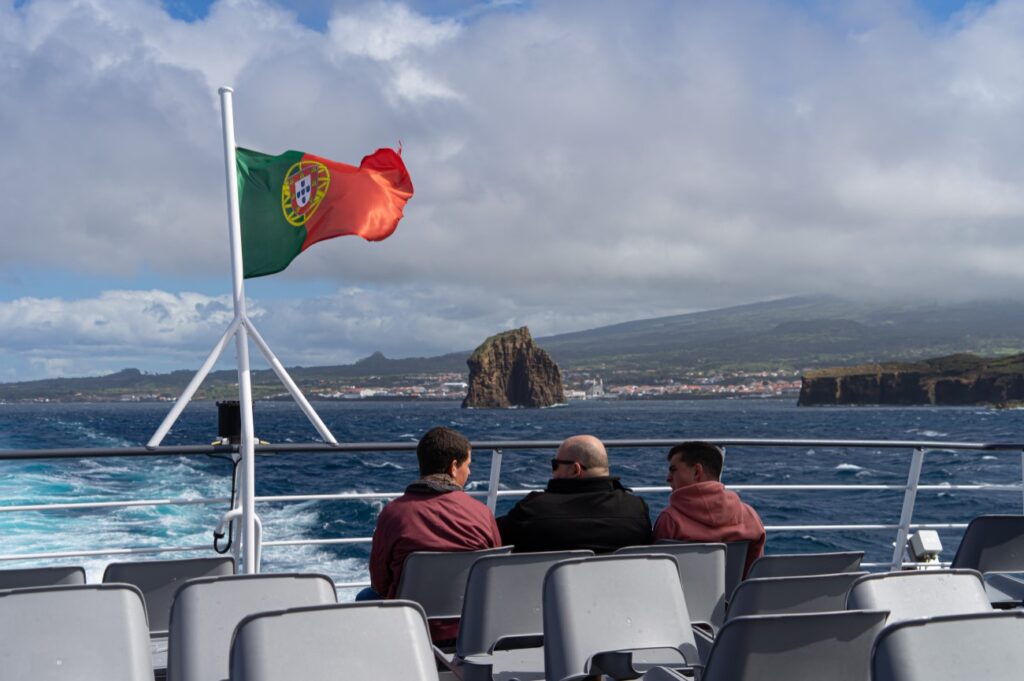
If you’re planning to visit several islands on one trip, you can travel by plane or by boat.
- SATA runs inter-island flights and offers an Air Pass that lets you visit every island in the archipelago
- Atlântico Line ferries are usually the cheaper option
- More routes are available in summer than in other seasons

São Miguel
The largest island in the Azores, São Miguel, is full of lakes, nature trails, waterfalls, and thermal pools. It’s also home to the Azorean capital and largest city, Ponta Delgada.
The historic center is worth wandering on foot, with its black-and-white stone architecture typical of the islands. Outside the city, don’t skip the tea and pineapple liqueur grown locally on São Miguel, and take the walk out to try the famous stew cooked slowly in the volcanic earth.


Santa Maria
Next comes Santa Maria, southeast of São Miguel. It was one of the first islands to form in the archipelago, and traces of its volcanic past are still visible across the landscape.
Santa Maria is known as the island of sun, so make time for its white sand beaches. Nearby, the semi-desert of Barreiro da Faneca stands out for its red soil and desert-like scenery. Vila do Porto and the smaller villages along the coast are worth exploring too, with their whitewashed buildings and charming churches.
Terceira
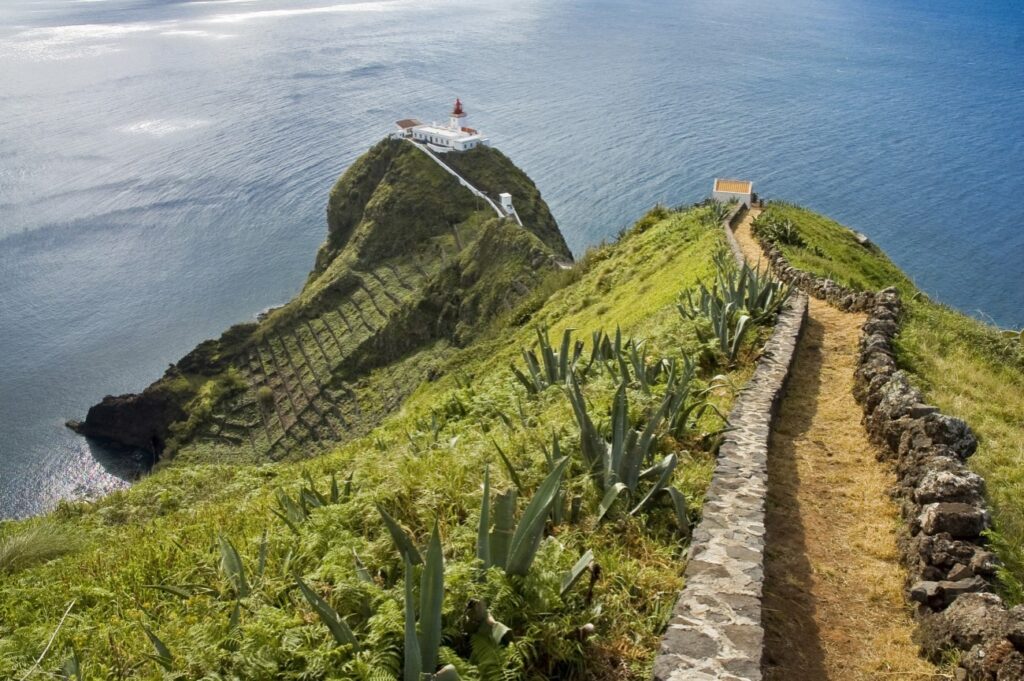
After the island of sun, head to beautiful Terceira, easy to reach thanks to its central location in the archipelago. Walk through its capital, Angra do Heroísmo, and take in the city hall, cathedral, and the many painted chapels scattered around this UNESCO World Heritage site.
From there, drive up for stunning views from Mount Santa Bárbara, swim in natural pools ringed by volcanic rock, and step inside lava tubes such as Algar do Carvão.

Graciosa
Graciosa is often left off Azores itineraries, but it’s well worth the detour.
Expect whitewashed houses, striking lava caves, and bright red windmills. Three days here is enough to explore the trails and unwind in the quiet natural pools along the coast.


São Jorge
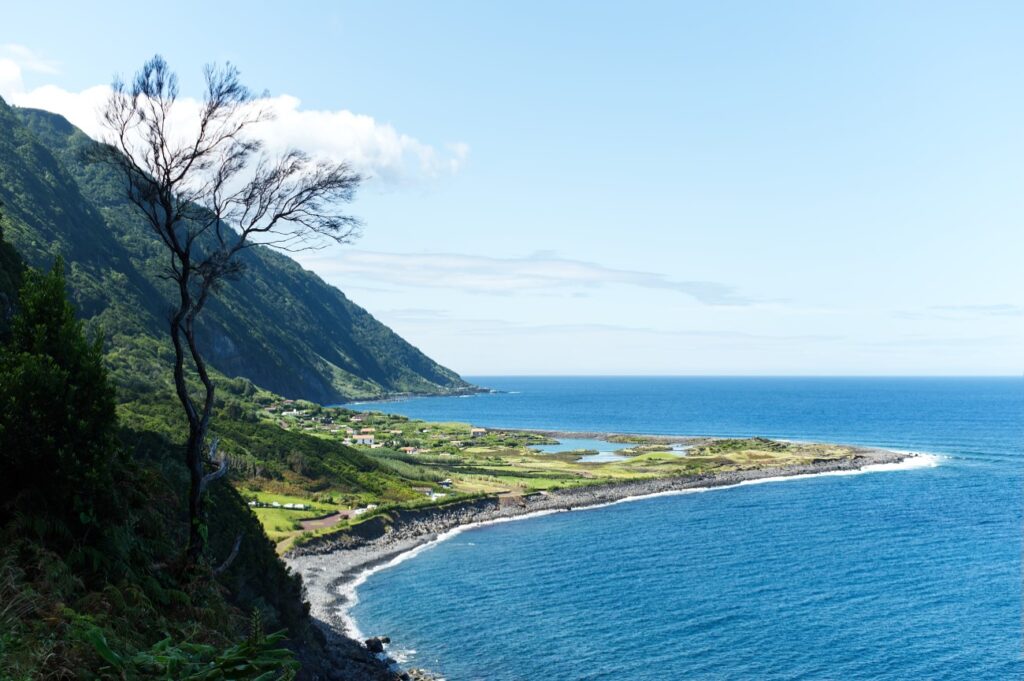
After a few restful days on Graciosa, it’s time to move on to São Jorge, home to some of the most striking scenery in the Azores. The island is shaped by numerous fajãs, flat coastal plains formed by lava flows and landslides. Swim in the volcanic pools and walk the hiking trails that trace the coastline.
You can’t leave São Jorge without trying Queijo São Jorge, widely considered the best cheese in the Azores.
Pico
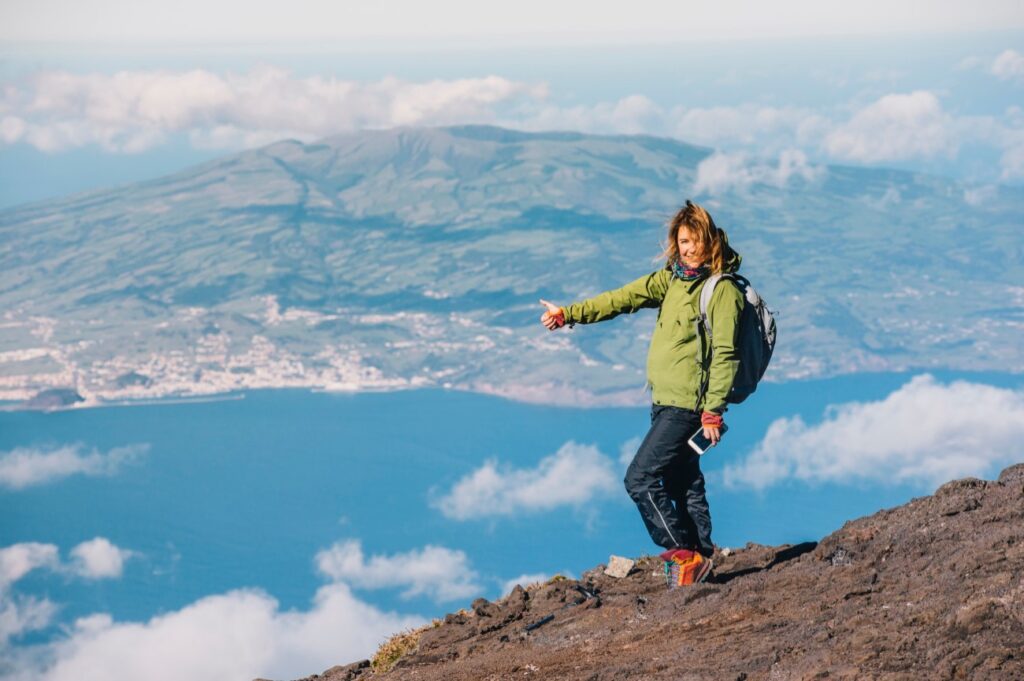
From São Jorge, the silhouette of Mount Pico is hard to miss, rising 2,351 meters on the island of the same name. Those views are reason enough to hop on the ferry over.
Pico doesn’t disappoint. Walk through its UNESCO-listed volcanic vineyards, taste the local wine, watch for whales offshore, and explore the island’s caves and lava tubes.
Faial
The journey continues on Faial, where fields of blue hydrangeas and stately beech trees spread across the landscape.
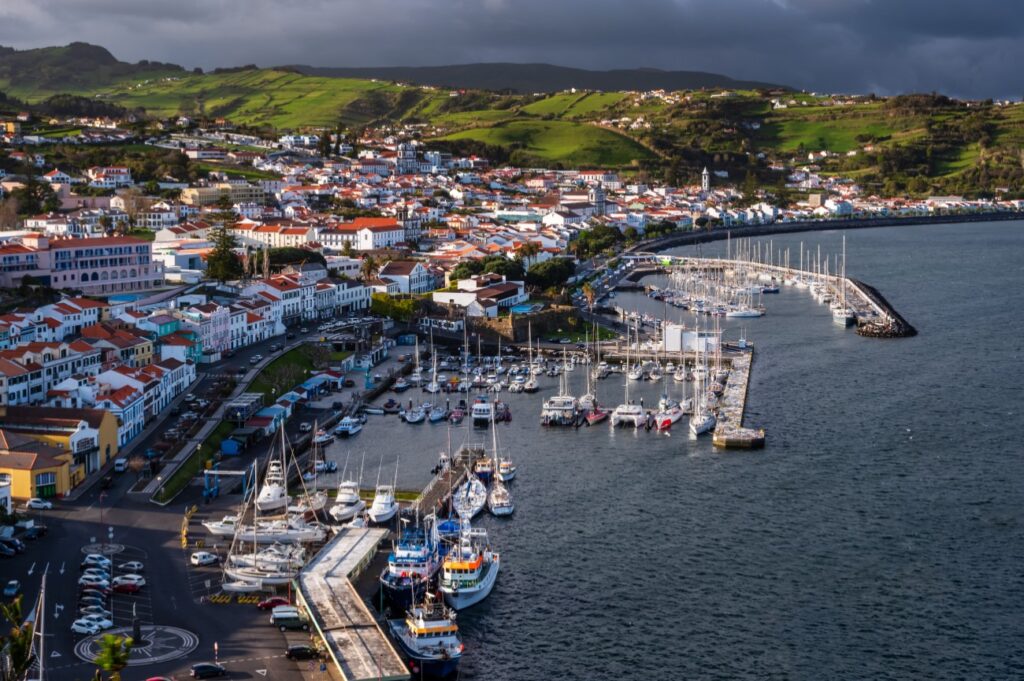
Separated from Pico by a narrow channel, Faial offers sweeping views of the neighboring islands and the ocean. Stop at Marina da Horta to admire the yachts, and drop into the well-known Peter Café Sport for a gin. Along the way you’ll pass villages and churches, and there are beaches and natural pools to rest at.
Flores
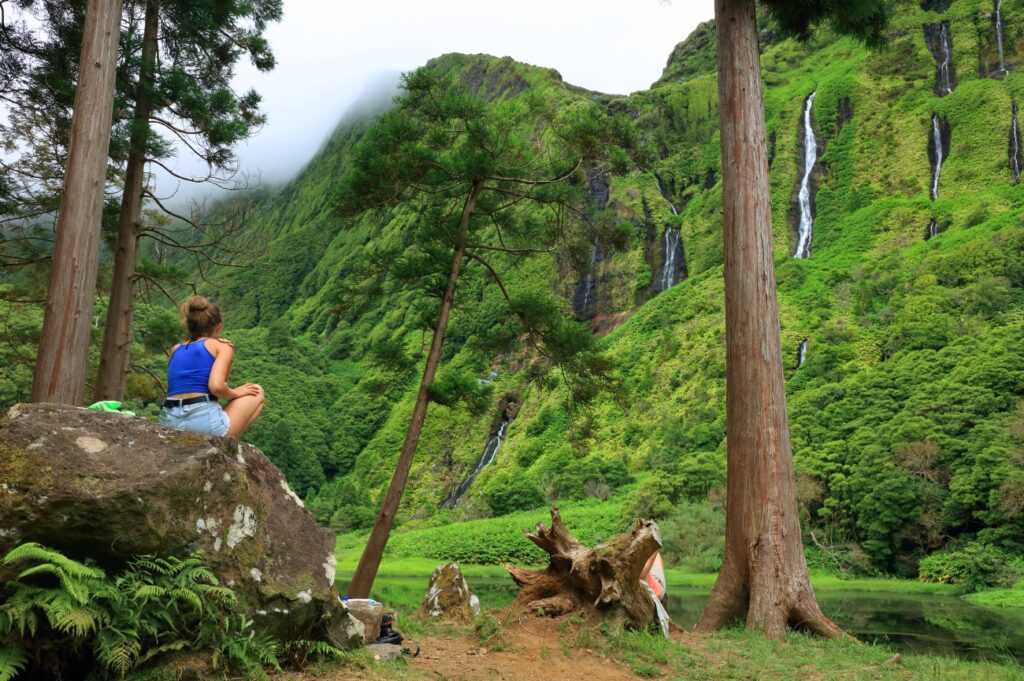
Heading further west, Flores is a UNESCO biosphere reserve. This small island is an open-air paradise, rich in flora, lagoons, and waterfalls.
Visit the Fábrica da Baleia do Boqueirão to learn about the island’s whaling history.
Corvo
The last stop is the smallest island in the archipelago, Corvo, reached by ferry from Flores. It’s worth the trip just to experience how removed from the rest of the world life is here.
One of the island’s standout sights is Caldeirão do Corvo. From there, head to the eco-museum to learn about the migratory birds that pass through the island. Round out the visit with the local church, the island’s windmills, and an afternoon at the beach.

Notes on Planning
- Two to three days is enough for most islands; give São Miguel and Terceira more time
- Book inter-island flights or ferries early, especially in summer
- Pack for changeable weather: sun, wind, and rain can all show up in one day
- Bring swimwear for both ocean beaches and volcanic hot pools
Follow us on Facebook